


Blog
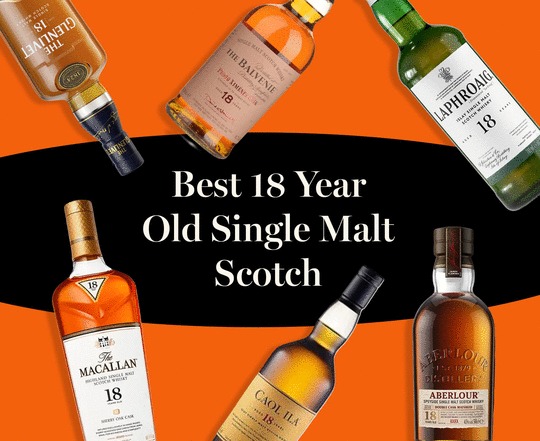
If there's a sweet spot in aged single malt Scotch, many would argue it's 18 years. Old enough to carry serious depth and complexity, young enough to retain vibrancy and freshness. Too young and you're leaving flavour on the table. Too old and the oak can start to dominate. At 18 years, the best distilleries hit their stride. Here are five expressions that prove the point.
Tamdhu is a distillery that doesn't get nearly the attention it deserves, and the 18 Year Old is a strong argument for changing that. Matured exclusively in Oloroso sherry casks for 18 years, bottled at 46.8% ABV without chill filtration and at natural colour, it earned Double Gold at the 2025 San Francisco World Spirits Competition and Gold at the 2025 ISC. Dense and mouth-coating with dried fruits, chocolate, vanilla, and brown sugar, finishing with dried apricot, dates, and stewed apple. Rich, structured, and deeply sherried in the best possible way. If you've been sleeping on Tamdhu, this is a good place to wake up.
Buy: Tamdhu 18 Year Old
Aberlour's 18 Year Old doesn't just compete with Macallan 18, some tasters genuinely prefer it. A double sherry finish in first-fill Oloroso and PX butts delivers rum-soaked raisins, cherries, blood orange, and chocolate on the nose, with vanilla, stewed berries, hazelnuts, and polished wood on the palate. Non-chill filtered and uncoloured at 43% ABV, it earned Gold and 96 points at the IWSC 2024. At its price point, it's arguably the best value 18-year-old in Speyside, full stop.
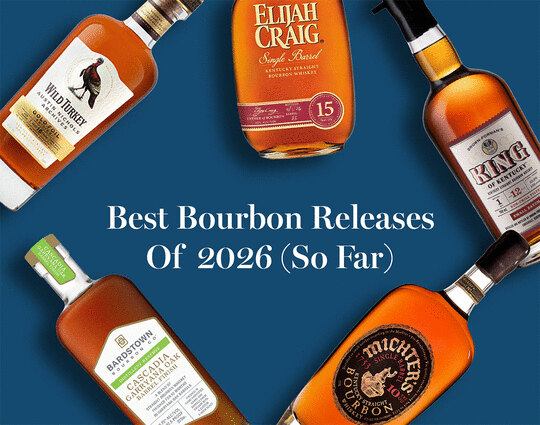
We're not even halfway through the year and 2026 has already delivered some seriously impressive bourbon. From long-awaited age statements to cult-favorite annuals doing their best work yet, the best bourbons of 2026 so far have genuinely raised the bar. Here's our countdown of the releases that have turned the most heads.
Booker's releases are reliably good, but the Big Easy Batch is something else. Named for New Orleans, a city that held a legendary place in founder Booker Noe's heart, this 7-year, 2-month, 15-day release is bottled uncut and unfiltered at a hefty 129.1 proof. It's a big, rye-driven bourbon that opens with cloves, black pepper, and charred rosemary before the palate finds its balance with cherry, raisin, tangerine, and brown sugar. The finish doubles down on black tea and spice. Is it the best Booker's batch in recent memory? A strong case can be made. We strongly recommend it as the base for an outstanding old fashioned.
Buy: Booker's Bourbon "Big Easy Batch" 2026-01
Cigar blends had their moment a couple of years ago and most people wrote them off. Barrel Craft Spirits didn't get the memo, and thank goodness for that. Their first-ever Cigar Blend has generated more genuine buzz than almost anything else released this year, and it's earned every bit of it. Opening with fruit, fried oak, and tobacco leaf, the midpoint brings stewed red fruits, mixed berry jam, leather, and rye spice before a complex finish of brown sugar, black peppercorn, and clove. At its price point, it's one of the best value pours of 2026 and a legitimate rival to the Joseph A. Magnus Cigar Blend.
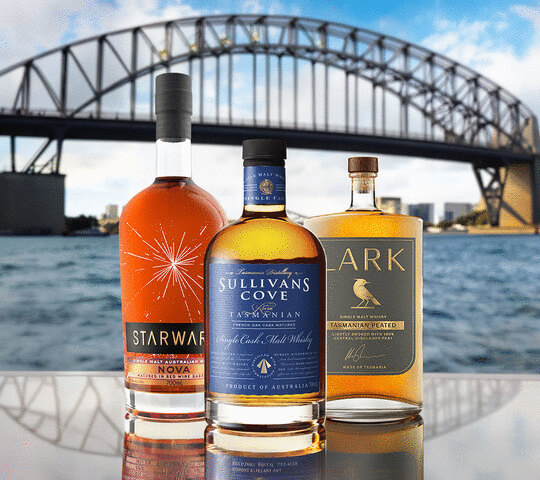
When most people think of world-class whisky, their minds jump to Scotland, Japan, or maybe Kentucky. But Australia? The Land Down Under has quietly become one of the most exciting whisky-producing regions in the world, with Tasmanian and mainland distilleries consistently winning top international awards and redefining what modern whisky can be.
Australian whisky has a surprisingly tumultuous history. Tasmania's Prohibition Distillation Act effectively killed the industry for decades until 1992, when Bill Lark began distilling at home and opened the first whisky distillery on the island since the 1830s. By the early 1990s, Australian whisky had a terrible reputation, mass-produced, low-quality spirits considered vastly inferior to imports. The craft whisky movement that emerged changed everything, focusing on quality over quantity.
Australian whisky distilleries use the same double pot still method employed in Scotland, but without deep customs or centuries-old traditions dictating decisions, Australian distillers have embraced experimentation in ways their Scottish counterparts rarely can.
Melbourne's temperature swings accelerate maturation, allowing distilleries like Starward to achieve flavor complexity faster than in cooler climates. Tasmania's pristine water and perfect barley-growing conditions create an ideal environment, earning the island a reputation as Australia's premier whisky region.
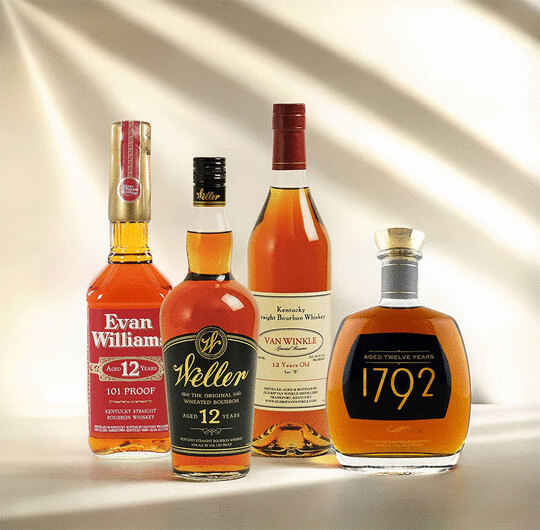
Let's get this out of the way- older bourbon isn't always the best bourbon. But there is a sweet spot that a lot of bourbon can hit somewhere between six and 15 years that just works. Beyond 15 years and the bourbon can get very tannic (woody and bitter); younger than six years and you'll get more goopy porridge and plasticky vanilla.That's why so many of the greats in the bourbon arena are 8, 10, 12, and 15 years old. Michter's 10 Year Single Barrel Bourbon, Pappy Van Winkle 15 Year, and Weller 12 Year are all icons for a reason.
Here are our top five 12-year bourbons worth seeking out in 2026.
If there's one bourbon that defined what a 12-year age statement could be, it's Weller 12 Year. This is the bourbon that paved the way for the entire category, setting the standard that others have been chasing ever since. The consistency alone is remarkable- as our partners at Breaking Bourbon put it: "I've had many batches of Weller 12 Year over the years and can say I've never had a bad one." That's a statement few bourbons can claim, especially over decades of production. This is about its flavors, overall balance, and dialed-in intensity. Few bourbons get it as right as Weller 12 does, erring on the side of sweet fruit notes in a way that many bourbon drinkers find very appealing. When Weller 12 gets it right, it gets it really right—and that's when the hype becomes exacerbated. It's a beautifully scripted bourbon featuring excellent flavors, delightful balance, and an extremely satisfying sip and earns our number 1 spot for best 12 year old bourbon to drink in 2026.
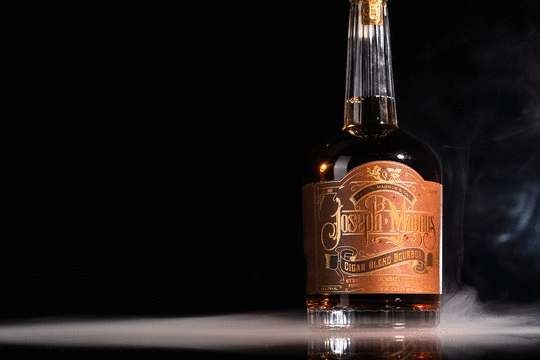
If you've been browsing bourbon shelves lately, you've probably noticed bottles labeled "Cigar Blend," "Cigar Cut," or "Cigar Batch." But what does that actually mean? Here's the story behind one of bourbon's newest and loosest designations.
Master blender Nancy Fraley is credited with coining the term "cigar blend bourbon" while working at Joseph Magnus & Co. The story goes that one evening she was smoking a pipe and drinking bourbon, finding that the flavors were just a little lacking for the experience she wanted. What she concocted was a blend of older whiskies (aged 11-18 years) finished in Cognac, Sherry, and Armagnac casks—flavors intended to be bold enough to hold up against tobacco and pair well with a fine cigar.
The first batch of Joseph Magnus Cigar Blend was released in late 2016, and the term quickly caught on across the industry. But Fraley's inspiration didn't come from nowhere—she was paying homage to a long tradition in France, where Cognac makers have created "cigare blends" designed specifically to pair with cigars for decades. Examples include Cognac Frapin Cigar Blend XO, Hine Cognac XO Cigar Reserve, and Cognac Park XO Cigar Blend dating back years. There's even Dalmore Cigar Malt, a single malt Scotch first introduced in 1999.
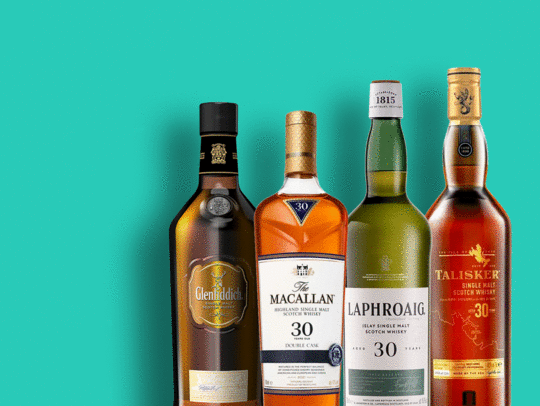
Is 30 years the golden age for single malt Scotch? Many would argue yes. By the time whisky reaches three decades in oak, it represents the pinnacle offering of many distilleries—a rare intersection of patience, craft, and extraordinary flavor development that few spirits can match.
By the time whisky reaches 30 years old, it's been in oak for 120 different seasons, absorbing flavor from the wood and losing alcohol gradually to the Angel's Share (between 2-5% evaporation per year per barrel). The result is incredibly rare—you'll find very, very few whiskies of this age, and those that exist represent unique pieces of history. There's something special about milestone whiskies. Big, round numbers appeal to us, and with so little liquid available at this age, distilleries put tremendous care into selection and blending. These expressions are highly sought-after by connoisseurs and make fabulous gifts for milestone birthdays, anniversaries, and special events. Looking for the perfect present for someone's 30th birthday? A bottle of 30-year-old Scotch is hard to beat. If your eager to purchase a 30-year-old bottle, be sure to check out our 30 Year Old Scotch Collection.
Choosing the "best" 30-year-old Scotch comes down to personal preference and style, but these five expressions represent the pinnacle of what three decades in oak can achieve:
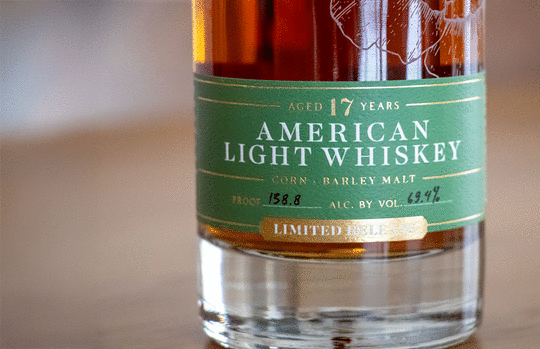
If you've been browsing whiskey shelves lately, you've probably noticed more bottles labeled "American whiskey" with impressively high age statements and equally eye-popping proofs—often at prices that seem too good to be true compared to similarly aged bourbon. Most of the time, that "American whiskey" is actually light whiskey, a federally designated spirits category with a history as fascinating as it is confusing.
Despite what the name suggests, light whiskey isn't called "light" because it's low-calorie, pale in color, or lower in proof. In fact, it's quite the opposite. According to TTB regulations, light whiskey must be:
That's it. There are no rules about mashbill, no minimum aging requirements, and no barrel entry proof restrictions. Bourbon and rye, by contrast, can only be distilled to a maximum of 160 proof and must be aged in new charred oak barrels. Light whiskey's higher distillation proof and flexible barrel requirements result in a lighter-bodied, less assertive spirit—hence the name.
Light whiskey was officially recognized as a category in 1968, born from desperation during American whiskey's darkest days. Imported vodka and Canadian whisky were crushing domestic bourbon and rye in the market, and American distillers were losing ground fast. They initially petitioned the government to loosen the rules for bourbon and rye—allowing higher distillation proofs and used barrels—but regulators rejected that idea, fearing it would damage bourbon's newly minted status as America's distinctive spirit.